Ep 15 - The Tennessee Spinal Medication Incident & Mitigating the Risks of Medication Errors
Definitions
From the Tennessee Health Facilities Report
“A sentinel event is a patient safety event (not primarily related to the natural course of the patient's illness or underlying condition) that reaches a patient and results in any of the following: Death, Permanent harm or severe temporary harm and intervention required to sustain life.” (p 32)
Serious Safety Event (SSE) - “Any unanticipated event deemed a deviation from generally accepted practice that reaches the patient and results in death, life-threatening consequences or serious physical or psychological injury. A serious safety event also signals the need for an immediate investigation.” (p 32)
We prefer the terms safety events or safety incidents over never events or accidents. Never Event has a negative connotation that inhibits reporting, as discussed in previous episodes (see Episodes 8 & 9 – HSSIB Sponges Report) and accident suggests that the outcome cannot be prevented.
See Episode 7 for a review of James Reason’s work on error.
Show Notes
On August 14, 2026, four patients scheduled for joint replacement in a Tennessee hospital received medication that the pharmacy labelled as a spinal anaesthetic but was in fact potassium phosphate. All four patients received their spinals within three hours of each other by the same anesthesiologist, who had no way of detecting the error made by the clinical pharmacy. This led to two people becoming paraplegic, one losing significant function in their legs, and one being placed on ECMO or a heart-lung bypass machine.
Timeline of events in the pharmacy
Technician #1 initially selected the correct mepivacaine 2% vial and placed it on a work surface. 20 minutes later, the technician scanned and photographed that correct vial and then determined that another vial was needed. One vial would have enough volume for five syringes, but the order called for six syringes, and so another vial was required.
The technician retrieved potassium phosphate from a different bin that was stored close by the mepivacaine bin. Notably, the vials were lookalike drugs with extremely similar size, contents, and labelling down to the displayed names being similar. When the additional vial of potassium phosphate would not scan, the technician returned to the storage area, placed the two vials (including the correct mepivacaine 2% vial) into the potassium-phosphate bin, and retrieved two more potassium-phosphate vials.
Technician #1 bypassed the scanning of these two vials, photographed the two vials of potassium phosphate, and placed them along with five empty syringes, and six mepivacaine labels into a bin that was passed into the mixing room.
Technician #2, supervised by Technician #3, filled five syringes with 4 mL each and labelled them mepivacaine 2%. She also took photographs which included the potassium-phosphate vials. Notably, Technician #2 in an interview with investigators described that checking vials in the compounding room was not her normal practice. Technician #3 looked briefly into the medication bin that was passed into the mixing room and then sat down a few feet away while Technician #2 drew up the medication.
Pharmacist #1 approved the preparation electronically. Approximately 29 seconds elapsed during the computer review. The pharmacist did not bring the syringes to the workstation for physical comparison and did not detect that both photographs from Technician #1 and Technician #2 showed vials of potassium phosphate rather than mepivacaine. He then added final labels and released them.
James Reason’s Swiss Cheese Model is used to simplify a complex process where harms occur due to ‘holes’ in the barriers or defences in depth. We do this so that we can properly investigate and improve our safety systems, but it is not where the inquiry ends – it is the beginning of the investigation. A thorough investigation examines not only what defences failed, but what defences should be strengthened and what new ones introduced. For example, the scanning of the medication in this incident as a defence against medication errors should be strengthened. The overall regulation and monitoring of the pharmacy by the regulatory body should also be considered. Finally, the Standard Operating Procedure (SOPs) of the frontline workers should be examined to see what can be strengthened, however, we note that behaviour or people-focused interventions are the weakest in the hierarchy of intervention effectiveness.
Analysis
Latent Conditions
Latent conditions are weaknesses in the defences that are not closely connected in time to the error or bad outcome. For example, the lookalike drugs (same size, similar label, writing, colouring etc) of the vials and the close proximity of each medication as opposed to segregation of high alert medications.
Technician #1’s bypass of the scanning system in that the system allowed her to bypass the scanning system without a pharmacist-controlled resolution or the entry of the drug ID number, both of which would likely have trapped the error.
Other latent conditions: the stress and possible fatigue of Technician #2 who was told that morning that she was on extended probation for training deficiencies and who would normally be working nights.
Technician #2’s training, which has already been identified as deficient by the organization, which is why she was being supervised.
Technician 3’s training to provide supervision. At the time of the investigation, the hospital could not provide records of what training they received in how to supervise.
The lack of a reconciliation process of what has been ordered vs what has been filled. In this case, six syringes were ordered, but only five produced.
Investigators found deficiencies in the culture of the hospital including an “over-reliance on technology” at the hospital in question.
Other latent conditions likely exist, but have yet to be uncovered due to the early stage of the investigation and the lack of strong medical investigatory systems that exist in other industries, such as aviation.
Active Failures
Technician #1’s failure to read the label (again in the context of a lookalike drug stored in close proximity to the correct medication);
Technician #2’s failure to read the label. In her interview with investigators, she reported that it was her practice not to read the labels of medications passed into the mixing room.
Technician #3’s failure to closely supervise Technician #2’s preparation of a medication she had never prepared before.
Pharmacist #1’s failure to closely examine the photographs taken by Technicians #1 and #2, both of which show the lookalike drug potassium phosphate instead of the ordered mepivacaine 2%.
The James Reason culpability models help determine accountability after an incident. The models can be used to distinguish system-induced errors, ordinary human mistakes, and culpable conduct.
The two flow charts work in series. One does not use the individual culpability model until the organization culpability model has been exhausted. That is because it is incumbent on organizations to provide appropriate training, clear and practical policies, appropriate equipment, resources, and support, before individual workers can be held accountable for errors.
The first question that is asked is whether there were applicable policies that were clear and practical for the situation. There is a difference between written policies and policies that are actually usable. In this case, Pharmacist #1 reported to investigators that he felt that there was an intentionally large gap between the written policies and the expectations of the frontline workers. Investigators in this report found that there was a culture of noncompliance in this workplace. These factors plus the fact that there were four pharmacy workers involved, suggests that the issue is systemic rather than individual in nature.
If one does get to the individual culpability model, one of the last questions asked is the “substitution test"—whether or not someone who is similarly situated would have made or has made a similar error in similar circumstances.
What if this was simply a ‘bad’ hospital, pharmacy, or ‘bad apples’?
First, having four ‘bad apples’ is unlikely in the extreme. The experience from other safety-critical industries tells us that this is almost certainly not isolated to a single organization. Second, we would do a disservice to the patients and healthcare professionals that were harmed in this incident if we did not take this opportunity to learn from this incident. Even the strongest, most safety-minded pharmacies and hospitals can find learning points here. It is that mindset – that systems can always be improved – that has permitted other safety-critical industries to make such significant safety improvements over the past several decades.
Other pharmacy medication errors that have resulted in death:
In 2006, 1.5 year old Emily Jerry in the United States died due to a pharmacy technician inappropriately preparing her chemotherapy. The pharmacy tech, rather than preparing the medication with the standard 0.9% normal saline stock, prepared it with a saline solution she had compounded that had 23.5% saline in it. The reason for this was never discovered. The pharmacist in that case was held criminally responsible for the death and spent time in prison. They now travel the country with Chris Jerry to create awareness of these issues.
In 2011 in the US the IMSP reported the death of an infant from an incorrectly compounded parenteral nutrition. The order was faxed over in the middle of the night and the pharmacy technician entered one number into an incorrect field. The calcium number—982 mg—was entered as a sodium amount. This resulted in a 60-fold sodium overdose. The automated IV compounding system accepted this value and the error went undetected in the pharmacy. A different label that listed the sodium content as the originally prescribed normal amount was applied directly over the label produced by the compounder software that had listed the actual amount of sodium (982 mEq) in the solution. Thus, the nurse who eventually started administration of the solution was unable to detect the error.
A few hours after the PN was started, routine lab studies showed that the infant’s sodium level was abnormally high. The infant’s physician assumed the study results were inaccurate and asked for the lab test to be redone. This was never accomplished before the infant experienced a cardiac arrest and died.
Andrew Sheldrick, age 8, died in Ontario, Canada in March 2016. Andrew’s compounded bedtime medication should have contained tryptophan. It instead contained baclofen, compounded at the concentration intended for tryptophan. He died after receiving the usual volume from a newly collected refill.
In all of these cases, checking the final container would not detect the error. All were fatal and there are many others in the United States, Canada, the UK, and around the world.
What can be learned from this incident
Latent conditions must be continually rooted out. They will not be found unless they are actively looked for. They take more effort to resolve than telling frontline workers to maintain their vigilance or take another training module.
Segregation of high alert medications is paramount.
Leadership walkthroughs are an important way to ensure that written policies are actually implemented.
Human factors should be taught to all front-line medical workers, including models and policies that consider how stress and fatigue increase the likelihood of errors being made and not being trapped.
There are tools to examine and strengthen the workplace culture. These should be considered and are properly part of a Safety Management System found in other safety-critical industries.
The use of technology (scanning the medication vials) is only one barrier. In this case, the barrier can be strengthened (likely by requiring a pharmacist-controlled resolution or some other check such as entering the drug ID number), but we also see what the investigators in this incident call an overreliance on technology.
That healthcare professionals can suffer from The Second Victim effect.
In upcoming episodes of the Medical Safety Podcast, Dr. Ken Catchpole talks about the use of icons (such as the biohazard symbol + colour coding), so that medication types can be easily identified from a distance (rather than words written on an IV bag).
Medications could be colour coded with dye, as aviation fuel is. While that may introduce the possibility of allergic reactions, a proper risk assessment should be conducted to see if the risk-benefit profile favours such an intervention. Such a recommendation occurs in other safety-critical industries in response to disasters of this nature.
People-focused solutions (training, adherence to SOPs such as telling workers to ‘read the label’ or ‘look at the pictures’) are the least effective. However, to the degree that this barrier can be improved, consideration should be given to examining the SOPs: what procedures are trained, are they actually used in practice, and are frontline workers regularly monitored for adherence to SOPs. In other safety-critical industries, the regulator is required to perform inspections of workplaces and ask the organization for proof that they regularly monitor for adherence to SOPs. This could be done in this industry. However, the inquiry cannot end here.
Additionally barriers for error-critical medications such as intrathecal medications. In this case, the hospital introduced an additional crosschecking of work for all intrathecal medications.
Reconciliation of the amount of medication orders vs filled by the pharmacy.
Revision of the regulatory oversight of clinical pharmacies to help prevent recurrence should be considered.
When drawing up medications:
Label syringe;
Select and read the vial’s medication and concentration;
Draw up into the syringe, and while connected, confirm the syringe label matches the vial’s label;
Before discarding the vial, check the label one more time; and
For high alert medications, consider asking a colleague to cross-check your work (e.g. insulin, heparin, protamine)
In accidental intrathecal administration, CSF lavage can be completed by replacing 15 ml of CSF with 15 ml of warmed preservative-free normal saline. This should only be done in consultation with neurosurgery and interventional radiology.
This investigation could be strengthened by
More closely examining each key player’s training and whether that training for all such workers should be updated, for example to include human factors training
Consideration of the human factors involved, e.g. stress, fatigue, and workload of the pharmacy workers
Review how the subject pharmacy monitored the preparation of medication and whether regulatory standards should be changed in this area;
Review the standards for how high alert medications are segregated, why they were not in this case, how regulation in this area might need to change, and what guidance should be given to other clinical pharmacies pending that review.
More particulars about the scanning software: what error messages were displayed, what the protocol was for that situation.
Before criticizing the clinical professionals (e.g. surgical team) that dealt with the emergencies involved in wrong intrathecal medication error (e.g. the timeliness of identification and appropriateness of care given), the training given to those professionals to identify and treat that situation should be examined. It is unfair to criticize someone in hindsight for a situation that they may never have been trained for and are extremely rare.
Other resources
James Reason’s Culpability Models (see below for diagrams)
The Hierarchy of Intervention Effectiveness Diagram (see below)
Safety intervention worth mentioning: Tennessee Health Facilities Report
Who can do what tomorrow?
Policymaker / government: Advocate for an aviation-style national medical investigatory body like England’s HSSIB and Norway’s UKOM, with independence from the regulator so that the entire system can be strengthened where necessary.
Hospital CEO / Department Head: Assess the organization’s safety culture using the available tools and monitor for adherence to SOPs. Investigate near misses to remove latent conditions and prevent sentinel events.
Practitioner: CRM and remaining vigilant with good practices.
Random recommendations
Amir: Properly ground coffee beans. Amir's coffee grinder.
Adam: Scrubs Season 2 (or 11?) is out on Disney+ in Canada.
James Reason Culpability Models
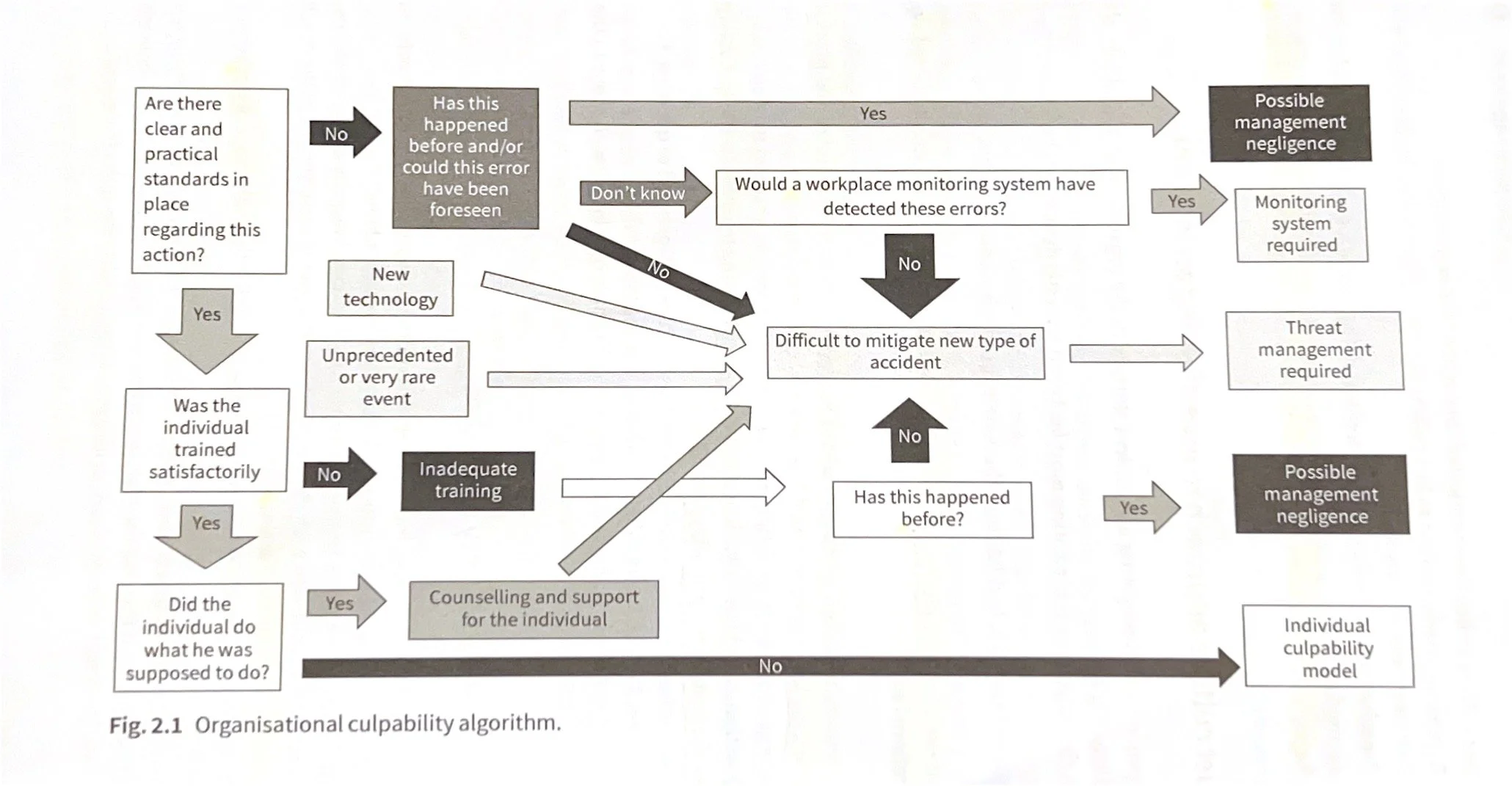
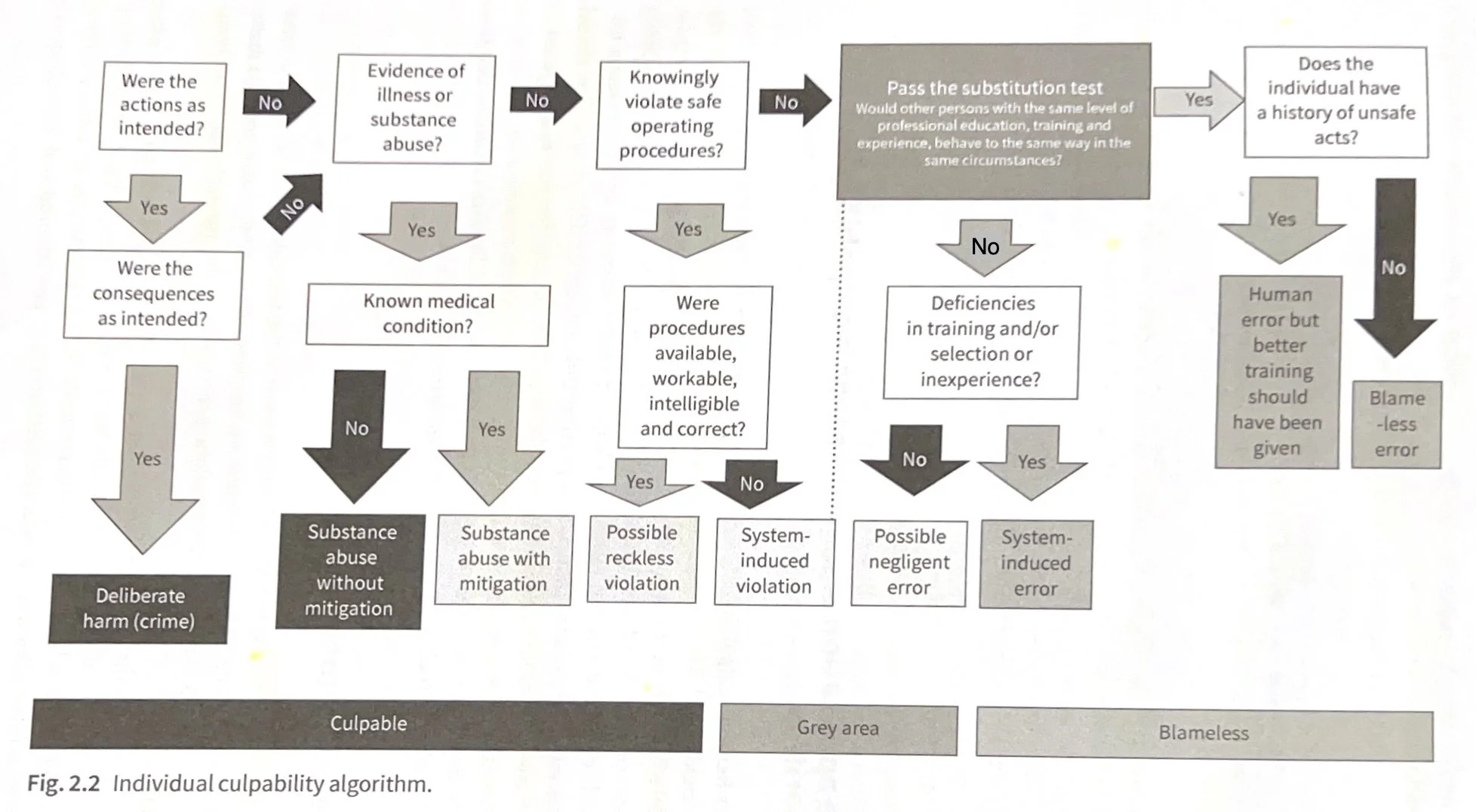
(From Practical Patient Safety, 2nd Ed, p. 48-49 used with permission.)
Note the authors wish to correct a mistake: on the individual culpability diagram, after the substitution test, the downward arrow should read “no”.
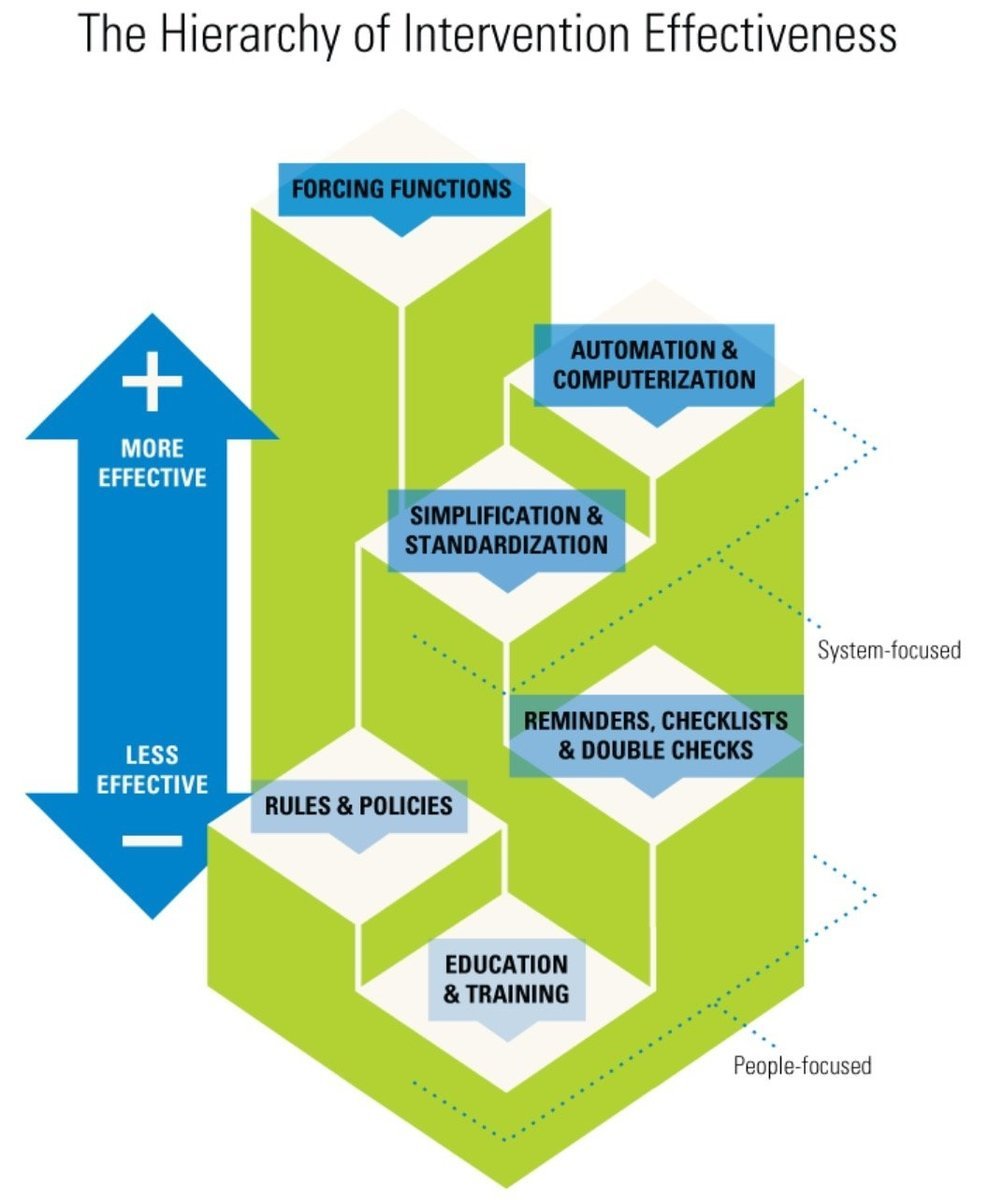

(HSSIB Retained swabs following invasive procedures)
Figure 9: Hierarchy of intervention effectiveness (image from Cafazzo and St-Cyr, 2012)